Welcome to Trust-in Multispeciality Hospital, Your trusted Healthcare in Horamavu
Multispeciality Hospital in Bangalore | Trust-in
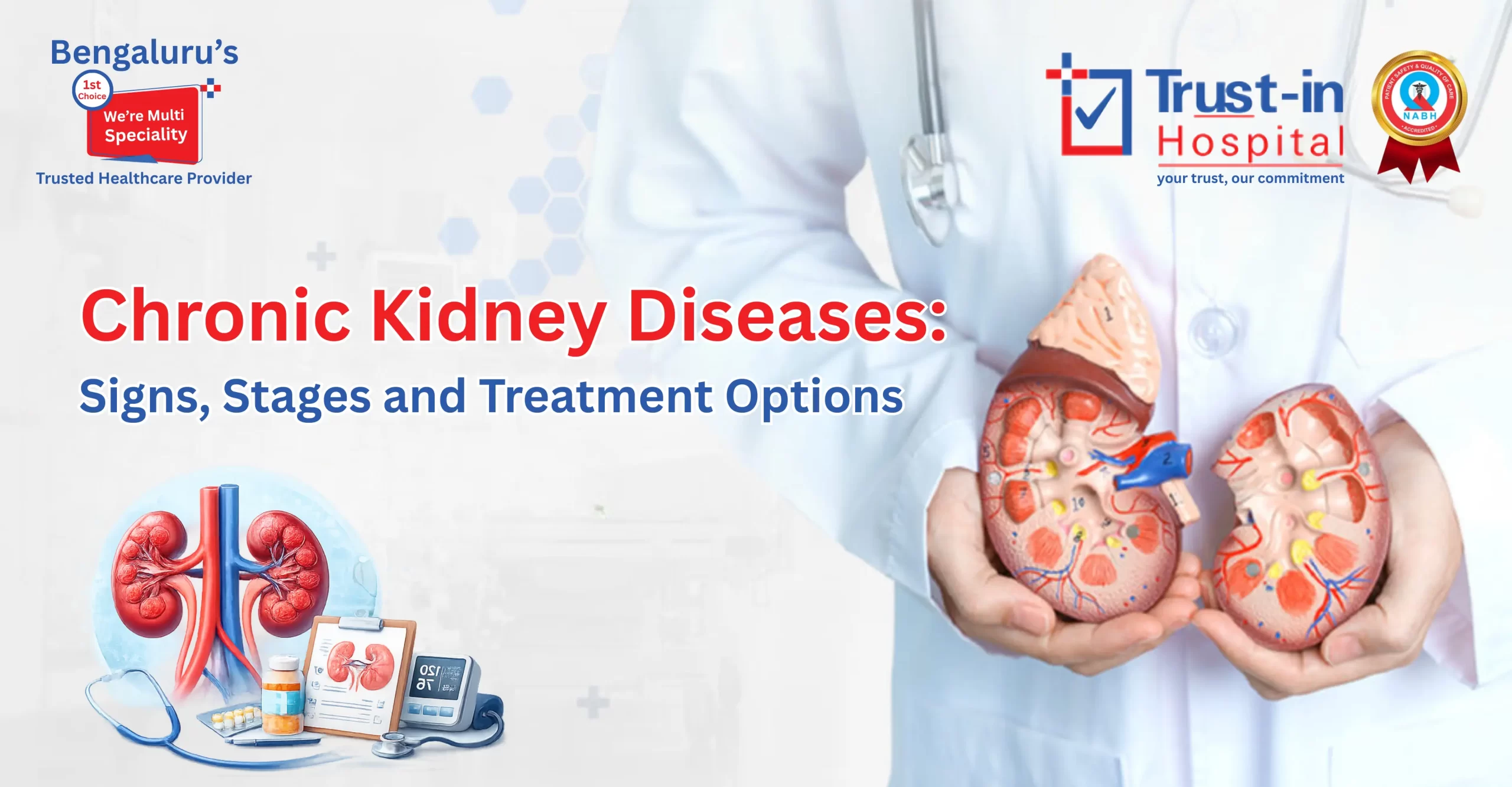
Chronic Kidney Disease (CKD) represents a permanent medical condition which results in progressively decreasing kidney function. The majority of people with kidney damage remain unaware of their condition until they reach its most severe stage.
This article discusses chronic kidney disease in a non-technical, reader-friendly way. It includes an explanation of how a person gets it, the symptoms, and some very basic possible solutions.
What Is Chronic Kidney Disease?
Chronic kidney disease is characterized as a tireless decrease in kidney work enduring more than three months. The kidneys play a pivotal part in sifting squander, adjusting liquids, controlling blood weight, and creating hormones fundamental for ruddy blood cell generation and bone health.
When kidney work decreases, destructive squanders and plenty of water start to amass in the body, driving to numerous wellbeing complications.
Common Causes of Chronic Kidney Disease
CKD as a rule creates as a result of basic restorative conditions that harm the kidneys over time.
Major Causes of CKD
| Causes | How It Affects the Kidneys |
| Diabetes | High blood sugar damages kidney filters |
| High blood pressure | Strains blood vessels in the kidneys |
| Glomerulonephritis | Inflammation of kidney filtering units |
| Polycystic kidney disease | Inherited cyst formation in kidneys |
| Recurrent kidney infections | Causes scarring and long-term damage |
| Prolonged medication use | Certain painkillers can harm kidneys |
Stages of Chronic Kidney Disease
Chronic kidney disease develops through various stages of its medical condition. The medical condition of chronic kidney disease has five stages which doctors use to assess kidney function through the measurement of glomerular filtration rate (GFR).
CKD Stages Explained
| Stage | GFR Level | Description |
| Stage 1 | ≥ 90 | Normal function with kidney damage |
| Stage 2 | 60–89 | Mild reduction in kidney function |
| Stage 3a | 45–59 | Mild to moderate kidney damage |
| Stage 3b | 30–44 | Moderate to severe kidney damage |
| Stage 4 | 15–29 | Severe reduction in kidney function |
| Stage 5 | < 15 | Kidney failure (End-stage renal disease) |
Early stages regularly appear few or no side effects, making scheduled wellbeing screening basic for individuals at risk
Symptoms of Chronic Kidney Disease
CKD symptoms may vary depending on the organ involved and may also develop gradually.
Early-Stage Symptoms
Symptoms can be mild in the early stages and may include:
- Fatigue
- Increased or diminished urination
- Swelling in feet or ankles
- Difficulty concentrating
Advanced-Stage Symptoms
As kidney work declines, symptoms end up more noticeable:
- Persistent sickness or vomiting
- Shortness of breath
- Muscle cramps
- Loss of appetite
- Itchy or dry skin
- Chest torment due to liquid buildup
Quick treatment evaluation is essential when indications decline or persist.
How Chronic Kidney Disease Is Diagnosed
Diagnosis includes a combination of research facility tests and imaging studies.
Common Symptomatic Tests
| Test | Purpose |
| Blood tests | Measure creatinine and estimate GFR |
| Urine tests | Detect protein or blood in urine |
| Blood pressure check | Identify hypertension |
| Ultrasound | Assess kidney size and structure |
| Kidney biopsy | Determine cause in select cases |
Regular checking makes a difference in tracking disease movement and treatment effectiveness.
Treatment Options
Patients with chronic kidney disease require treatment that focuses on three main components, which involve reducing physical activity, monitoring their symptoms and preparing for potential medical emergencies.
Medical Management
Treatment plans may include:
- Blood weight control
- Blood sugar administration for diabetic patients
- Medications to diminish protein misfortune in urine
- Treatment for iron deficiency and bone disorders
Lifestyle and Dietary Changes
Lifestyle alterations play a key part in kidney health:
- Reducing salt intake
- Limiting protein as advised
- Staying physically active
- Avoiding smoking and alcohol
- Maintaining a sound weight
Advanced Treatment Options
In later stages, progressive care may be required:
- Dialysis: Removes waste and abundance fluid
- Kidney transplant: Replaces failed kidney with benefactor kidney
Early arranging can help patients make educated decisions.
Preventing the CKD
Although CKD cannot continuously be anticipated, movement can frequently be moderated through:
- Regular therapeutic follow-ups
- Strict blood weight and sugar control
- Avoiding superfluous medications
- Staying hydrated
- Managing cardiovascular chance factors
When to See a Doctor
You should consult a nephrology specialist if you experience:
- Persistent swelling
- Changes in urination
- Ongoing fatigue
- High blood weight that is troublesome to control
Early mediation makes advances in long-term outcomes.
Frequently Asked Questions (FAQs)
Is incessant kidney infection reversible?
CKD is as a rule not reversible, but movement can be moderated with legitimate care.
Can CKD be recognized early?
Yes. Scheduled blood and pee tests can identify early kidney damage.
Is dialysis required for all CKD patients?
No. Dialysis is, technically required in progressed stages.
What nutrients should CKD patients avoid?
High-sodium, high-potassium, and high-phosphorus nutrients may require restriction.
Can CKD patients live a typical life?
With proper care, numerous patients lead manageable and satisfying lives.
Conclusion
Chronic kidney disease is recognisable but in reasonable condition when recognized early. Understanding the stages, recognizing side effects, and following an organised treatment arrangement can altogether moderate illness movement and diminish complications. Customary wellbeing checkups and way of life changes play a crucial part in ensuring kidney wellbeing. Trust-in Hospital provides complete care and support to help manage and treat kidney conditions, guiding you through every step of your journey to better health.