Welcome to Trust-in Multispeciality Hospital, Your trusted Healthcare in Horamavu
Multispeciality Hospital in Bangalore | Trust-in
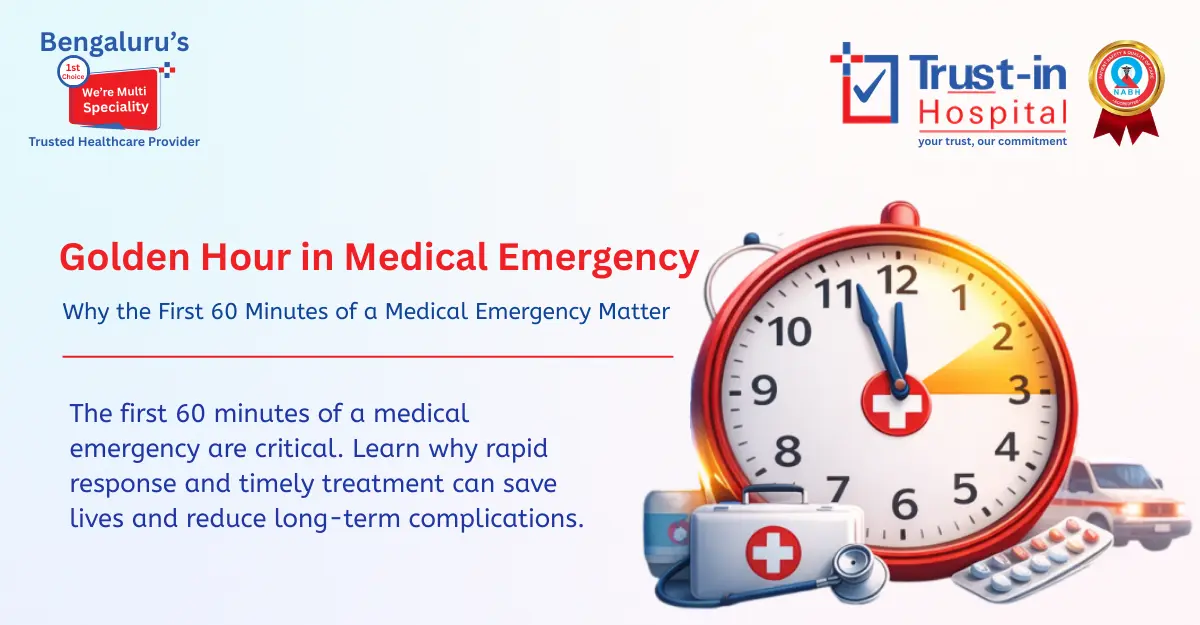
The first hour after a medical emergency starts is often the most basic. Emergency Specialists commonly refer to this period as the ‘golden hour‘ since the activities taken amid these 60 minutes can decide survival, recovery, and long-term health. Whether it includes sudden chest pain, signs of a stroke, or genuine wounds, early medical care in the first hour can prevent complications, decrease hurt to vital organs, and save lives. Understanding why this time window makes a difference, patients and carers react more rapidly and more confidently.
What Happens in the First 60 Minutes?
When a medical emergency happens, the body is under extreme push. Bloodstream, oxygen supply, and organ work may be compromised. The longer treatment is postponed, the more prominent the hazard of lasting damage.
During the first 60 minutes:
- The heart and brain are most vulnerable.
- Tissue harm can start quickly
- Early treatment can switch or constrain harm
- Survival chances are essentially higher
This is why emergency reaction frameworks prioritise speed over all else.
Why Time Is So Basic in Therapeutic Emergencies
- Organs Require Oxygen to Survive
The brain and heart depend on a consistent supply of oxygen-rich blood. When this supply is hindered, harm starts inside minutes.
- Brain cells can begin biting the dust inside 4–6 minutes
- Heart muscle harm increments with each passing minute
- Delayed treatment may lead to lasting disability
Early medication makes a difference in regaining blood flow, and irreversible oxygen harm occurs.
- Early Treatment Reduces Complications
Emergency medical care does more than spare lives. It, moreover, decreases long-term issues such as:
- Chronic heart failure
- Paralysis or discourse difficulties
- Organ failure
- Prolonged recovery or rehabilitation
Patients treated early frequently recoup faster and with fewer complications.
How the first 60 Minutes Influence Common Emergencies
Sudden Chest Pain
Chest pain may flag a heart-related issue. In the first hour:
- Medications can break down or diminish blockages
- Bloodstream to the heart can be restored
- Heart muscle harm can be minimised
Delays increment the chance of heart ache and life-threatening complications.
Stroke Symptoms
In a stroke, each minute brain cells are rapidly misplaced.
Early treatment within the first hour can:
- Restore blood flow to the brain
- Reduce the extent of brain damage
- Improve chances of full recovery
Late treatment regularly results in permanent disability.
Serious Trauma or Injury
In accidents or injuries, early care helps:
- Control bleeding
- Stabilise imperative signs
- Detect inside injuries
- Prevent stun and infection
Immediate therapeutic consideration can be the contrast between recovery and deep-rooted disability.
What You Must Do Within the First 60 Minutes
Act Immediately
- Call emergency medical services without delay
- Clearly clarify indications and location
- Do not hold up to see if side effects improve
Keep the person safe
- Help them sit or lie down comfortably
- Keep them calm and warm
- Avoid nourishment, drink, or pharmaceuticals unless advised
Follow Proficient Instructions
Emergency administrators may give direction until offered assistance arrives. Take after enlightening carefully and remain with the patient.
Common Mistakes That Waste precious time
Avoid these delays during a medical emergency:
- Ignoring indications since they appear mild
- Waiting for torment to pass
- Self-medicating at home
- Driving long separations instep of calling emergency services
Even minor delays can have genuine consequences.
How Emergency Care Works in the First Hour
Emergency divisions are outlined to act rapidly amid the first 60 minutes by:
- Performing fast assessments
- Running critical tests
- Administering life-saving medications
- Stabilising breathing and circulation
- Involving masters immediately
This facilitated reaction is why early clinic entry is so important.
Preparing Yourself and Your Family
You cannot avoid each emergency, but you can be prepared:
- Learn common caution signs
- Keep emergency numbers effortlessly accessible
- Manage constant wellbeing conditions
- Encourage normal wellbeing check-ups
Preparation makes a difference, decreases freeze and spares important time.
Beyond medical treatment, the first 60 minutes also influence how smoothly a patient progresses through recovery. Early intervention through effective emergency medical response and timely emergency medical transport can reduce the need for intensive procedures, prolonged hospital stays, and long-term rehabilitation. Patients who receive prompt emergency care are more likely to regain independence, return to daily activities sooner, and experience a better overall quality of life after the event.
Public awareness is equally important during medical emergencies. When patients, family members, and caregivers understand the signs of medical emergency situations and act quickly, outcomes improve across communities. Recognizing warning signs, trusting instincts, and seeking immediate help without hesitation can prevent serious complications. Timely access to respiratory emergency treatment and expert care from a trauma specialist in Bangalore can make a life-saving difference when every second counts.
Conclusion
The first 60 minutes of a medical emergency are often the most critical. Quick recognition, rapid action, and immediate medical care can save lives, reduce complications, and improve recovery outcomes. Whether it’s sudden chest pain, stroke symptoms, or a serious injury, never delay seeking professional help from a 24 hours emergency hospital near Horamavu.