Welcome to Trust-in Multispeciality Hospital, Your trusted Healthcare in Horamavu
Multispeciality Hospital in Bangalore | Trust-in
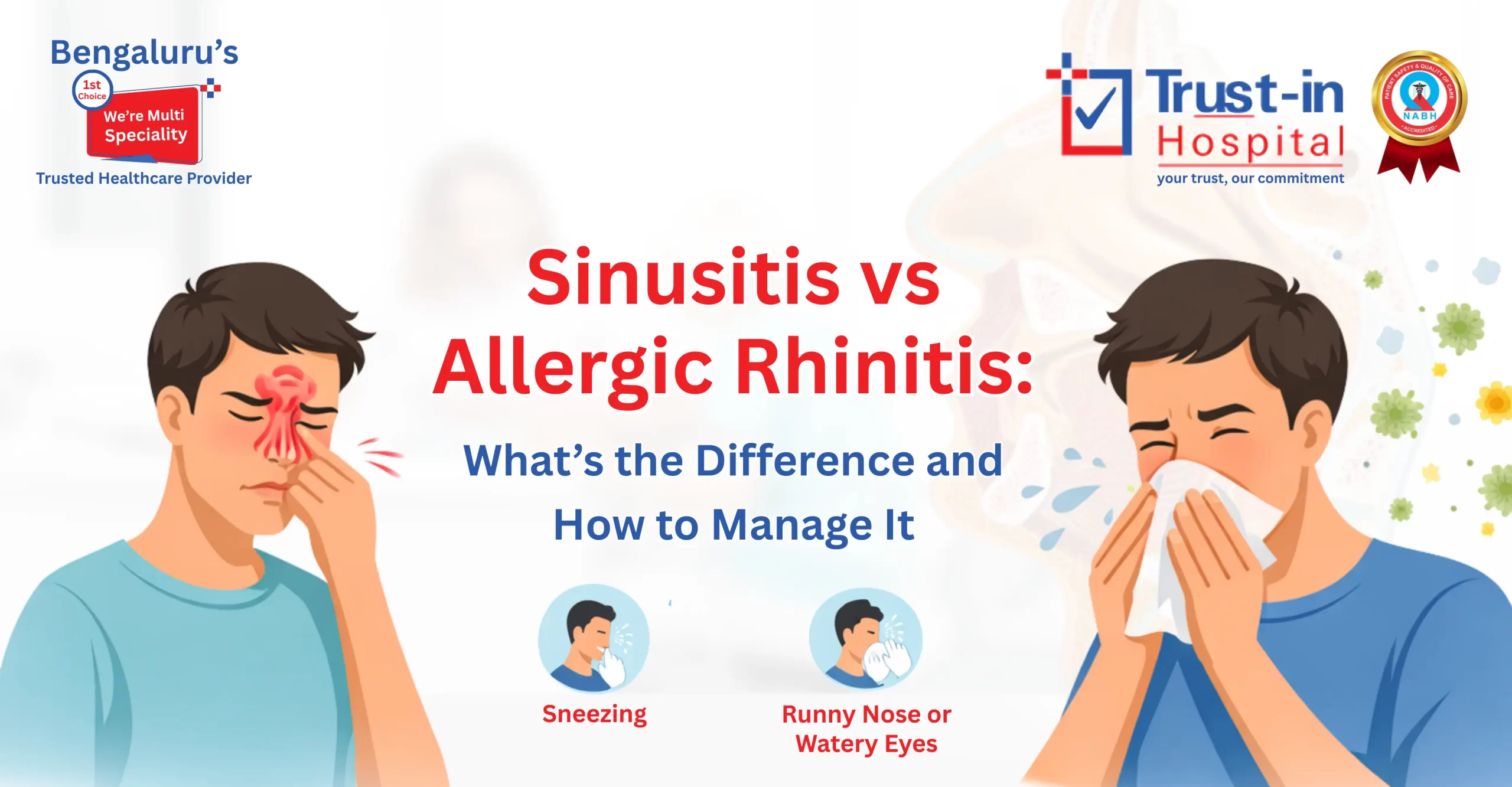
Nasal blockage, wheezing, facial pressure, and a runny nose are common complaints. Every individual accepts these indications are due to a “sinus problem”, but in reality, they may be caused by sinusitis or allergic rhinitis. Whereas these conditions share comparable side effects, they have diverse causes and require diverse approaches to treatment.
Understanding the contrast can offer assistance to patients looking for the right care and dodging superfluous discomfort.
Understanding the Nose and Sinuses
The nose channels, warms, and dampens the air we breathe. Behind the nose are little air-filled spaces called sinuses, which offer assistance with breathing and voice quality. When these zones gotten to be aggravated, contaminated, or kindled, indications develop.
What Is Sinusitis?
Sinusitis is a medical condition where the sinuses become swollen or infected. Sinuses are small, air-filled spaces located around the nose, cheeks, forehead, and eyes. These spaces produce mucus that drains smoothly into the nose. When sinuses get blocked after a cold, mucus gets stuck in space in your nasal passage.
This creates pressure and allows germs to grow, leading to pain and discomfort. Sinusitis is usually linked to an infection and can last for even longer in some cases.
Causes of Sinusitis
Sinusitis can be activated by:
- Cold infections
- Bacterial infections
- Blocked nasal passages
- Deviated nasal sinus septum
- Nasal polyps
- Left untreated allergies
Common Symptoms of Sinusitis
- Thick nasal release (yellow or green)
- Facial torment or weight (around eyes, cheeks, or forehead)
- Headache
- Blocked or stuffy nose
- Reduced sense of smell
- Fever (in a few cases)
- Tooth torment or ear pressure
Sinusitis can be short-term (intense) or long-lasting (persistent) if side effects hold on for weeks.
What Is Allergic Rhinitis?
Allergic rhinitis is caused by an allergic response, not a disease. It happens when the safe framework blows up due to substances like cleaning products, dust, foam, or pet hair.
When uncovered to these allergens, the nose gets to be aggravated, leading to hypersensitivity symptoms.
Causes of Allergic Rhinitis
Allergic rhinitis happens when the body responds to safe substances. It includes
- Dust mites.
- Pollen
- Pet dander
- Mold
- Strong smells or smoke
Avoiding triggers makes a difference control symptoms.

Common Symptoms of Allergic Rhinitis
- Frequent sneezing
- Clear, watery nasal discharge
- Itchy nose, eyes, or throat
- Nasal congestion
- Watery or ruddy eyes
Allergic rhinitis can be regular (such as dust hypersensitivities) or year-round (such as tidy or pet allergies).
Sinusitis vs allergic Rhinitis: A Straightforward Comparison
| Feature | Sinusitis | Allergic Rhinitis |
| Cause | Infection or inflammation | Allergic reaction |
| Nasal discharge | Thick, coloured | Clear and watery |
| Facial pain | Common | Rare |
| Fever | May occur | No |
| Itching | Uncommon | Common |
| Trigger | Cold, infection | Dust, pollen, allergens |
Treatment Options Matters
Treating hypersensitivities like an infection—or disregarding sinus diseases, considering they are “just allergies”—can delay recuperation. Each condition needs a distinctive administration approach, and a legitimate conclusion makes a difference anticipate complications.
How Is Sinusitis Managed?
Treatment centers on clearing blockage and treating contamination if present.
Common Treatment Options
- Steam inward breath to extricate mucus
- Saline nasal splashes or rinses
- Adequate hydration
- Pain help medications
- Antibiotics (as it were when bacterial contamination is confirmed)
- Medical assessment for tireless or extreme cases
In incessant cases, encouraged tests or master care may be required.
How Is allergic Rhinitis Managed?
Management centers on maintaining a strategic distance from triggers and controlling symptoms.
Common Treatment Options
- Identifying and dodging allergens
- Antihistamines to diminish hypersensitivity response
- Nasal showers to decrease inflammation
- Keeping living spaces clean and dust-free
- Wearing covers amid tall dust exposure
Long-term hypersensitivity administration may require direction from an ENT specialist.
When Should You See a Doctor?
Seek restorative counsel if:
- Symptoms last for more than 10 days
- Facial torment or swelling increases
- Fever develops
- Symptoms return frequently
- Breathing gets to be difficult
- Daily exercises are affected
Early care can anticipate complications and move forward comfortably.
Simple Avoidance Tips
- Wash hands regularly
- Treat colds early
- Avoid known allergens
- Keep indoor discussions clean
- Stay hydrated
Do not self-medicate more than once without advice
Conclusion
Now we can understand that sinusitis and allergic rhinitis have similar symptoms but are not same.The first is caused by contaminants, whereas the other is caused by sensitivities. Knowing the difference helps patients to select the right treatment and get help faster.
If nasal indications endure or meddle with everyday life, counselling a healthcare proficient guarantees secure and viable care. The specialists at Trust-In Hospital provide comprehensive evaluation and personalized treatment to help patients breathe easier and improve their quality of life.


Thanks for breaking down the differences between sinusitis and allergic rhinitis— it’s easy to confuse the two, especially since the symptoms overlap so much. I appreciated the explanation about how blocked sinuses can lead to infection, and it’s helpful to know that untreated allergies can contribute to sinus issues too. This clarity really helps people understand when to seek the right kind of care.
This is a helpful explanation because many people assume every persistent runny or blocked nose is a sinus infection, when it could actually be allergic rhinitis. The distinction you made between infection-related symptoms and allergy triggers is especially important for choosing the right treatment approach. It would also be interesting to know when someone should see a doctor instead of managing symptoms at home.