
Trust-in
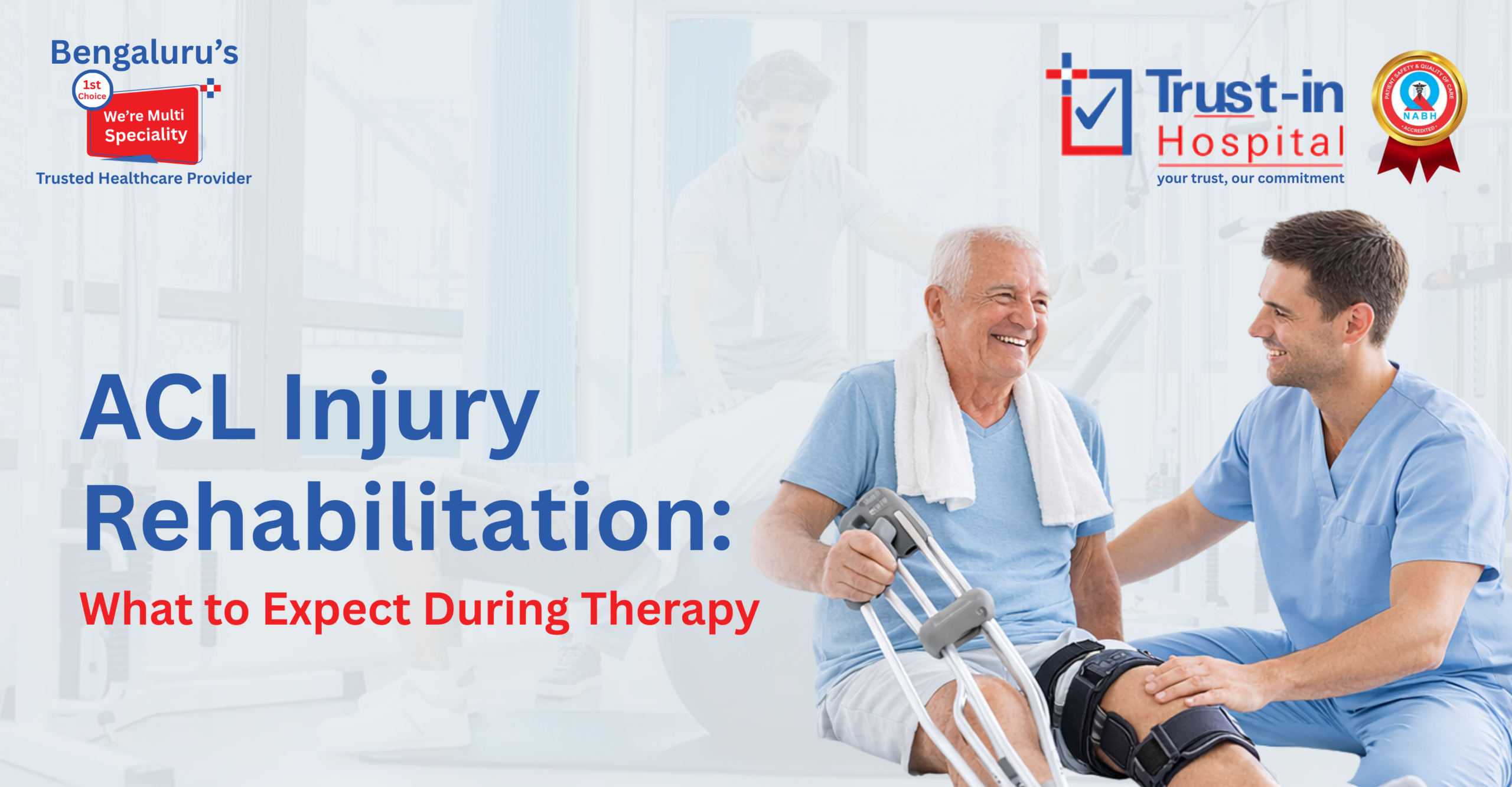
Active people who face an ACL injury encounter both physical and emotional difficulties which create major obstacles for them. The process of recovery takes dedicated rehabilitation work and requires patience to complete regardless of whether the injury occurred during sports activities or through a fall or an abrupt shift in movement. The primary method for restoring strength and balance and functional ability needs to begin with physical therapy although some cases may require surgical intervention.
Understanding what to anticipate amid ACL physiotherapy makes a difference to patients in remaining committed and reasonable throughout their recuperation timeline.
What Is an ACL Injury?
The Anterior Cruciate Ligament (ACL) functions as a main ligament that provides knee joint stability. The ligament connects the femur thigh bone to the tibia shin bone while it controls both forward motion and rotational stability.
An ACL damage may involve:
- A halfway tear
- A total tear
- Ligament stretching
- Common indications include:
- A popping sound at the time of injury
- Knee swelling
- Instability whereas walking
- Pain amid movement
- Reduced run of motion
Early evaluation and early rehabilitation are basic for ideal recovery.
Goals of ACL Rehabilitation
ACL restoration is organized around dynamic breakthroughs rather than settled timelines. The primary destinations include:
- Reducing torment and swelling
- Restoring knee extension of motion
- Rebuilding muscle strength
- Improving adjust and coordination
- Regaining utilitarian mobility
- Preventing re-injury
- Safely returning to sports or every day activities
Every program is personalized based on damage seriousness and whether surgery was performed.
Phases of ACL Rehabilitation
Recovery ordinarily advances through four fundamental phases.
- Intense Stage (Weeks 0–2)
Focus: Torment control and swelling reduction
During the beginning organize, treatment includes:
- Rest and elevation
- Ice application
- Gentle range-of-motion exercises
- Quadriceps actuation exercises
- Use of bolsters (in the event that required)
Early development anticipates solidness and muscle loss.
- Early Reinforcing Stage (Weeks 2–6)
Focus: Recapturing versatility and essential strength
Therapists introduce:
- Controlled weight-bearing exercises
- Stationary cycling
- Hamstring strengthening
- Straight leg raises
- Closed-chain exercises
The objective is to reestablish typical strolling designs and progress muscle engagement.
- Progressed Quality and Solidness Stage (Weeks 6–12)
Focus: Building muscle perseverance and balance
Exercises may include:
- Squats and lunges
- Resistance band training
- Balance board exercises
- Core strengthening
- Step training
This organize moves forward joint steadiness and neuromuscular control.
- Return-to-Activity Stage (3–9 Months)
Focus: Sport-specific or high-level utilitarian training
Depending on recuperation progress:
- Light jogging
- Agility drills
- Jump training
- Direction-change exercises
Clearance for sports ordinarily depends on quality testing and utilitarian assessments.
ACL surgery recovery timeline
| Phase | Primary Goal | Duration (Approx.) |
| Acute | Control torment & swelling | 1–2 weeks |
| Early Strength | Restore mobility | 2–6 weeks |
| Advanced Strength | Improve stability | 6–12 weeks |
| Return to Activity | Functional performance | 3–9 months |
Recovery may change depending on the person recuperating and the surgical intervention.
Importance of Muscle Strengthening
The quadriceps and hamstrings play a major part in knee steadiness. Powerless muscles increment strain on the tendon and delay recovery.

Targeted strengthening:
- Reduces joint instability
- Prevents compensatory development patterns
- Improves strolling mechanics
- Supports long-term joint health
- Consistency is basic for economical results.
- Balance and Neuromuscular Training
An ACL injury influences proprioception—the body’s sense of joint position. Restoration centers on retraining this framework through:
- Single-leg standing
- Controlled energetic movements
- Stability drills
- Reaction-based exercises
Improved neuromuscular control brings down the chance of future injury.
Post-Surgical vs Non-Surgical Rehabilitation
Some patients experience ACL remaking surgery, whereas others may select for preservationist treatment.
| Aspect | Post-Surgery | Non-Surgical |
| Initial recovery | Slower in early phase | Faster initially |
| Long-term stability | Often superior for athletes | Suitable for low-demand activity |
| Rehab duration | 6–9 months | 3–6 months |
The choice depends on action level, age, and knee instability.
Emotional Perspectives of Recovery
ACL recovery can be rationally requested. Competitors may fear re-injury, whereas others may feel disappointed by moderate advance. Setting reasonable turning points and celebrating little enhancements makes a difference keep up motivation.
Support from physiotherapists, family, and coaches reinforces adherence to treatment programs.
Common Challenges Amid Therapy
Patients may encounter:
- Swelling after strongly sessions
- Temporary muscle soreness
- Plateaus in progress
- Fear of full weight-bearing
Open communication with the specialist guarantees secure alterations to the program.
Tips for a Effective Recovery
- Follow your therapist’s informational carefully
- Avoid hurrying return to sports
- Perform domestic works consistently.
- Maintain a adjusted diet
- Get satisfactory rest
- Attend all follow-up appointments
Patience and teach altogether impact outcomes.
When to Contact Your Doctor
Seek restorative counsel if you experience:
- Increasing knee swelling
- Severe pain
- Locking of the knee
- Fever after surgery
- Sudden instability
Early intercession avoids complications.
Frequently Asked Questions (FAQs)
- How long does ACL injury take to recover?
Recovery as a rule ranges from 6 to 9 months after surgery, in spite of the fact that timelines vary.
- Can I return to sports after an ACL injury?
Yes, with appropriate restoration and therapeutic clearance.
- Is physiotherapy painful?
Exercises may feel challenging but ought to not cause extreme pain.
- Can an ACL injury mend without surgery?
Partial tears and low-demand people may recover without surgery, depending on stability.
- What happens if restoration is skipped?
Skipping treatment increments the chance of constant insecurity and assists knee damage.
Conclusion
ACL injury restoration is a organized, dynamic preparation pointed at rebuilding quality, soundness, and work to the knee joint. Whereas recuperation requires time and devotion, a well-designed physiotherapy program altogether moves forward results and decreases re-injury risk.
Through expert guidance and persistent effort along with active dedication to their goals, Trust-In Hospital patients will achieve successful returns to their everyday activities and sports, having regained both their physical abilities and their confidence.


I like how this post highlights the holistic nature of ACL rehabilitation, including the importance of mental strength along with physical recovery. It’s easy to forget the emotional side of such injuries, but staying positive and being patient during recovery can really speed things up.