Welcome to Trust-in Multispeciality Hospital, Your trusted Healthcare in Horamavu
Multispeciality Hospital in Bangalore | Trust-in
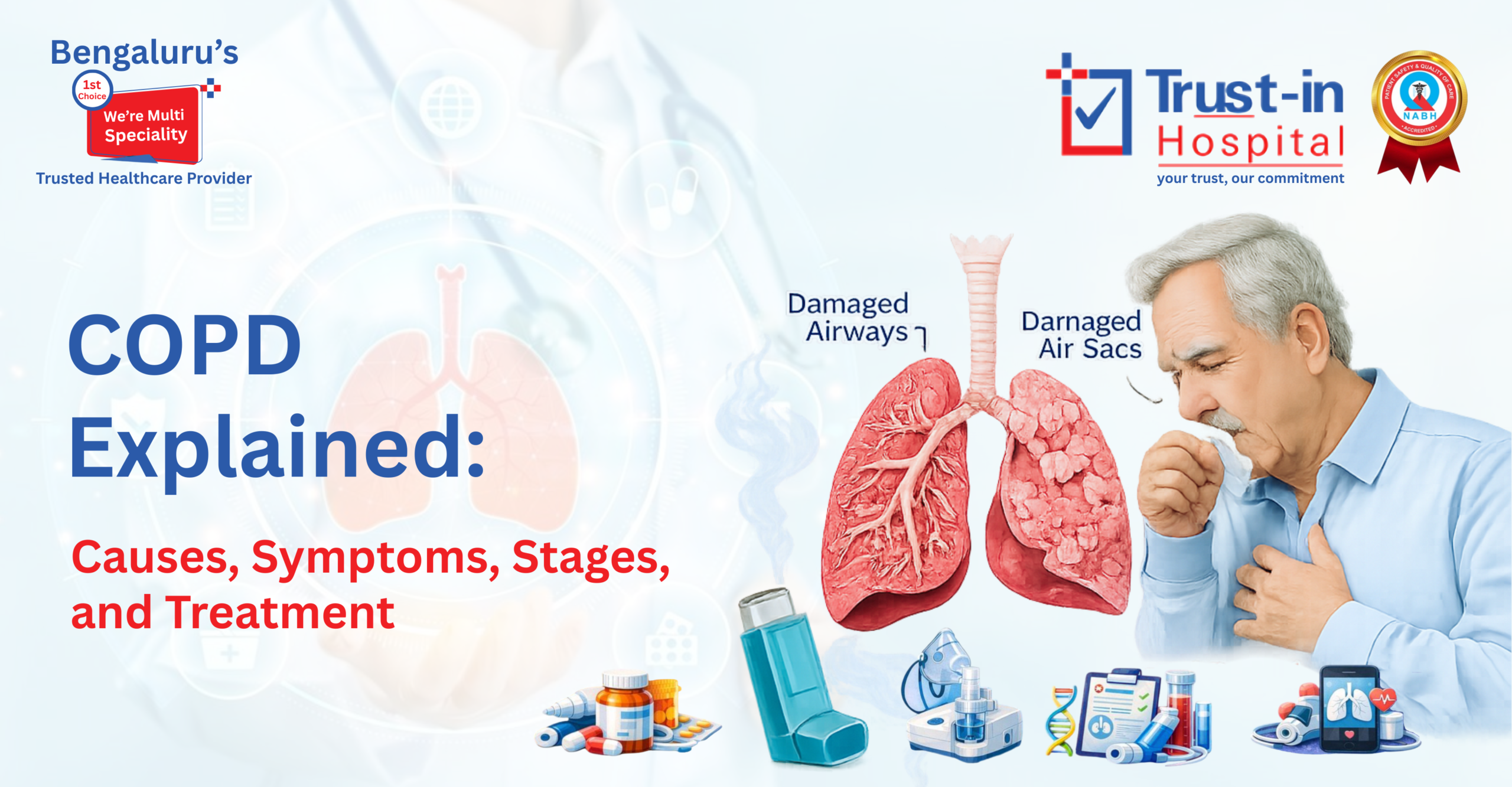
The process of breathing remains automatic for most people until they encounter difficulties with it. The condition of chronic breathing problems which worsen with time serves as a warning sign for a serious lung disease known as Chronic Obstructive Pulmonary Disease(COPD). The combination of early detection with lifestyle changes and suitable medical treatment will lead to significant improvements in life quality which will also help slow down disease development.
This direct clarifies what COPD is, its causes, indications, stages, and accessible treatment options.
What Is COPD?
Chronic Obstructive Pulmonary Disease (COPD) is a dynamic lung infection that makes it troublesome to breathe. It ordinarily incorporates two fundamental conditions:
- Chronic bronchitis (long-term airway inflammation)
- Emphysema (harm to discuss sacs in the lungs)
Over time, wind current gets to be limited due to irritation and auxiliary harm in the lungs.
Causes of COPD
The essential cause of it is long-term exposure to aggravations that harm the lungs.
Major chance variables include:
- Smoking cigarette
- Secondhand smoke exposure
- Air pollution
- Occupational clean and chemicals
- Long-term introduction to biomass fuel smoke
- Genetic conditions (seen as alpha-1 antitrypsin deficiency)
Smoking remains the driving supporter worldwide.
Common Indications of Chronic Obstructive Pulmonary Disease
Symptoms as a rule create steadily and decline over time.
- Persistent cough
- Excess bodily fluid production
- Shortness of breath (particularly amid activity)
- Wheezing
- Chest tightness
- Fatigue
- Frequent respiratory infections
In advanced stages, indeed basic exercises may cause breathlessness.
Stages of COPD
It is commonly classified utilizing spirometry comes about that degree wind stream limitation.
| Stage | Description | Typical Symptoms |
| Mild (Arrange 1) | Slight wind current limitation | Occasional hack, gentle breathlessness |
| Moderate (Arrange 2) | Worsening airflow | Increased shortness of breath amid activity |
| Severe (Organize 3) | Significant limitation | Fatigue, visit flare-ups |
| Very Serious (Organize 4) | Advanced lung damage | Severe breathlessness, decreased quality of life |
Early conclusion makes a moderate progression.
How Chronic Obstructive Pulmonary Disease Is Diagnosed
Diagnosis involves:
- Detailed therapeutic history
- Physical examination
- Spirometry (lung work test)
- Chest X-ray or CT scan
- Blood oxygen level measurement
Spirometry is the most critical test to affirm wind current limitation.
Treatment Options
It is deemed to be incurable, yet symptoms can be treated by certain measures, and further incidents may be prevented through these remedies.
- Smoking Cessation
Quitting smoking is the most vital step in abating infection progression.
- Medications
Common drugs include:
| Medication Type | Purpose |
| Bronchodilators | Relax aviation route muscles |
| Inhaled corticosteroids | Reduce inflammation |
| Combination inhalers | Improve airflow |
| Antibiotics | Treat infections |
| Oral medications | Manage flare-ups |
Medications are frequently conveyed by means of inhalers for focused relief.
- Pneumonic Rehabilitation
Structured restoration programs include:
- Supervised work out training
- Breathing techniques
- Education approximately illness management
- Nutritional guidance
Pulmonary restoration progresses perseverance and decreases symptoms.
- Oxygen Therapy
In progressed cases, supplemental oxygen may be required to keep up satisfactory blood oxygen levels.
- Surgical Options
In chosen serious cases:
- Lung volume lessening surgery
- Lung transplantation
These are considered, as it were, when other medicines are insufficient.
Managing COPD at Home
Lifestyle alterations play a imperative part in side effect control.
- Avoid smoking and contaminated environments
- Maintain immunizations (flu and pneumonia)
- Follow endorsed medicine schedule
- Practice breathing exercises
- Maintain a adjusted diet
- Engage in secure physical activity
Small everyday propensities essentially progress long-term outcomes.
Breathing Methods That Help
Patients regularly benefit from:
- Pursed-lip breathing
- Diaphragmatic breathing
- Controlled hacking techniques
These strategies move forward wind stream and decrease breathlessness amid activity.
Complications of Chronic Obstructive Pulmonary Disease
Without legitimate administration, it may lead to:
- Recurrent lung infections
- Heart complications
- Pulmonary hypertension
- Respiratory failure
- Severe weight loss
Early and reliable treatment diminishes complication risk.
Recognizing a COPD Flare-Up
Seek prompt therapeutic consideration if you experience:
- Sudden declining breathlessness
- Increased bodily fluid production
- Change in bodily fluid color
- Fever
- Chest pain
Early medication amid flare-ups avoids hospitalisation.
Emotional and Mental Impact
Patients with chronic lung disease commonly experience anxiety and chronic stress, particularly in terms of limited mobility due to breathlessness. Instruction, organized restoration, and family bolster offer assistance patients adjust and keep up autonomy. Mental well-being is a vital component of long-term infection management.
Frequently Asked Questions (FAQs)
- Is COPD reversible?
No, lung harm is changeless. In any case, movement can be moderated with legitimate treatment.
- Can non-smokers develop COPD?
Yes. Natural presentation and hereditary variables can also contribute.
- How long can somebody live with chronic obstructive pulmonary disease?
Life expectancy depends on infection arrangement, smoking status, and treatment adherence.
- Is working out secure for COPD patients?
Yes, when directed. Aspiratory recovery programs are profoundly beneficial.
- Can COPD be prevented?
Avoiding smoking and constraining presentation to lung aggravations altogether diminishes risk.
Conclusion
Chronic obstructive pulmonary disease is a dynamic but sensible lung infection. Early treatment, smoking cessation, fitting drugs, aspiratory recovery, and way of life alterations altogether move forward quality of life. Whereas the condition cannot be cured, proactive administration engages patients to breathe simpler and live more actively.
Regular restorative follow-ups and commitment to solid propensities at Trust-in Hospital are fundamental to abating movement and anticipating complications.

For years, I struggled with both Chronic Obstructive Pulmonary Disease (COPD) and Multiple Sclerosis (MS), two conditions that severely affected my breathing, mobility, and independence. COPD left me dependent on an oxygen tank, while MS caused fatigue, muscle weakness, numbness, and balance issues that made everyday movement difficult. Despite years of hospital visits, treatments, therapies, and medications, my symptoms continued to progress, leaving me physically and emotionally exhausted. I committed to a five-month natural support regimen. The improvement I experienced was remarkable. Today, I can breathe without oxygen support, walk independently, and enjoy a better quality of life. I am truly grateful for the care and holistic support that helped me regain my strength, confidence, and independence.