Welcome to Trust-in Multispeciality Hospital, Your trusted Healthcare in Horamavu
Multispeciality Hospital in Bangalore | Trust-in
Watching your child grow and learn to talk is an enjoyable part of parenthood. So, when speech is delayed or words are not coming as expected, it is normal for parents to feel stressed. One common and regularly ignored reason for speech delay in youthful children is recurring ear infections. Ear infections are exceptionally common in newborns and little children. Whereas numerous clear-ups with appropriate treatment or visit untreated ear diseases can sometimes affect hearing—and hearing plays a key part in speech improvement. Understanding these connections can offer assistance to parents who take convenient activity and support their child’s development.
How Children Learn to Speak
Children learn speech basically by tuning in. From birth, babies assimilate sounds, words, and dialect designs from people around them. They tune in, mirror, and continuously start to speak.
If a child cannot hear sounds clearly – even temporarily – it can moderate down how rapidly they learn words and sentences. This is where ear infections can have an impact.
What Are Ear Infections?
Ear infections usually happen in the middle ear, the space behind the eardrum. They are particularly common in children under five years of age since their ear structures are still emerging.
Common causes include:
- Colds and upper respiratory infections
- Blocked liquid in the ear
- Allergies
- Exposure to smoke
Many children are involved in at least one ear infection in their early childhood.
Signs of Ear infections in Children
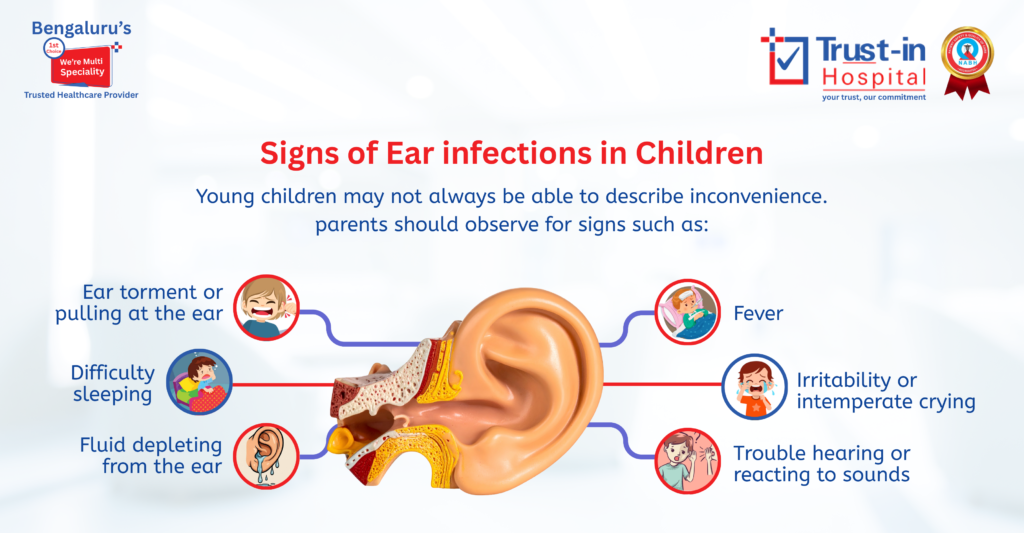
Young children may not always be able to describe inconvenience. Parents should observe for signs such as:
- Ear torment or pulling at the ear
- Fever
- Irritability or intemperate crying
- Difficulty sleeping
- Fluid depleting from the ear
- Trouble hearing or reacting to sounds
Repeated infections may cause liquid to stay in the ear indeed after pain reduces.
How Ear infections Can affect speech Development
When fluid builds up in the middle ear, it can decrease hearing clarity. Sounds may appear suppressed compared to hearing submerged. If it happens regularly or keeps going for long periods, a child may miss critical sounds required for speech learning.
Possible impacts include:
- Delayed to begin with words
- Limited vocabulary
- Unclear pronunciation
- Difficulty shaping sentences
The delay is more regular than not brief, but early consideration is important.
Signs of Speech Delay parents Ought to Notice
Every child creates at their own pace, but certain signs may demonstrate a delay.
Watch for:
- Not chattering by 12 months
- Not saying straightforward words by 18 months
- Limited words by age two
- Difficulty understanding basic instructions
- Unclear speech compared to peers
If speech appears deferred along with serious ear infections, it is worth examining with a doctor.
When should parents be concerned?
Occasional ear diseases ordinarily do not cause long-term speech issues. In any case, concern increments when:
- Ear infections happen frequently
- Fluid remains in the ear for months
- The child appears not to listen well
- Speech advance is slow
Early assessment makes a difference in avoiding future difficulties.
Diagnosis and Restorative Evaluation
A pediatrician or ENT doctor may:
- Examine the ears
- Check for liquid behind the eardrum
- Assess hearing if needed
- Monitor speech development
Hearing tests are secure and easy, indeed, for young children.
Treatment Alternatives for Ear Infections
Treatment depends on the seriousness and frequency of infections.
Common approaches include:
- Medications to treat infection
- Monitoring liquid buildup
- Managing hypersensitivities or colds
- In a few cases, minor strategies to progress ear drainage
Proper treatment helps re-establish hearing clarity and support speech development.
Supporting speech Improvement at Home
Parents play a key part in helping their child’s speech grow.
Helpful tips:
- Talk to your child often
- Read out loud each day
- Use basic, clear words
- Encourage your child to rehash sounds
- Be understanding and positive
Even daily intuitions make an enormous difference.
Role of speech Therapy
If speech delay continues, a ENT specialist may offer assistance. Treatment focuses on:
- Improving sound clarity
- Expanding vocabulary
- Building certainty in communication
Early speech treatment is profoundly successful and bolsters long-term dialect skills.
Can Speech Delay Be Reversed?
In several cases, yes. When ear infections are treated early and hearing makes strides, children frequently catch up with speech improvement. With medical care, treatment if required, and strong domestic interaction, most children make great progress.
When to Look for Medical care Immediately
Consult a healthcare professional if:
- Ear infections are frequent
- Speech delay appears noticeable
- Your child does not react to sounds
- You have concerns approximately hearing
Trusting your instinct as a parent is important.
Conclusion
Speech delay can be stressful for parents, but it is often controllable—especially when associated to ear infections. Understanding the connection between hearing and speech helps parents to behave early and with confidence.
With opportune medical care, suitable treatment, and strong communication at home, most children create solid speech and language aptitudes. If you have concerns, talking with a Trust-in Hospital provides the first and best step towards making your child succeed.